
In the 3D visualization industry, technical complexity grows exponentially with each new feature release. From GPU Path Tracing algorithms to 3D Digital Backbone interoperability workflows, mastering advanced software capabilities requires immediate access to accurate, contextualized information, not just for support teams, but across every department.
At Lumiscaphe, we’ve experimented with AI-powered expertise to address this challenge, not as a replacement for human knowledge, but as an intelligent assistant that accelerates information flow across R&D, sales, marketing, studio, communication, and technical support teams.
The goal: create an intelligent assistant accessible to all teams that could:
- Instantly retrieve relevant information tailored to different roles
- Provide sourced, verifiable answers with links to original documentation
- Accelerate cross-functional knowledge sharing
- Improve both internal efficiency and customer experience
The cross-functional knowledge challenge
Lumiscaphe’s product ecosystem sush as Patchwork 3D for real-time photoreal rendering, 3D Digital Backbone for collaborative 3D data management, and various Blender integration tools, represents hundreds of features, workflows, and technical specifications. This complexity creates knowledge access challenges across the organization:
- For R&D teams
Instant access to technical specifications, development history, and feature dependencies to ease code refactoring, and a code generation helper. - For Sales & Marketing
Immediate understanding of product benefits, use cases, and competitive positioning differentiators. Sales engineers can confidently answer technical questions during client meetings, while marketing can accurately communicate feature value. - For Technical Support
Finding precise answers to customer questions under time pressure. Rapid retrieval of procedures for customer inquiries, plus consistent messaging across all channels. - For new hires
Onboarding across multiple products with steep learning curves.
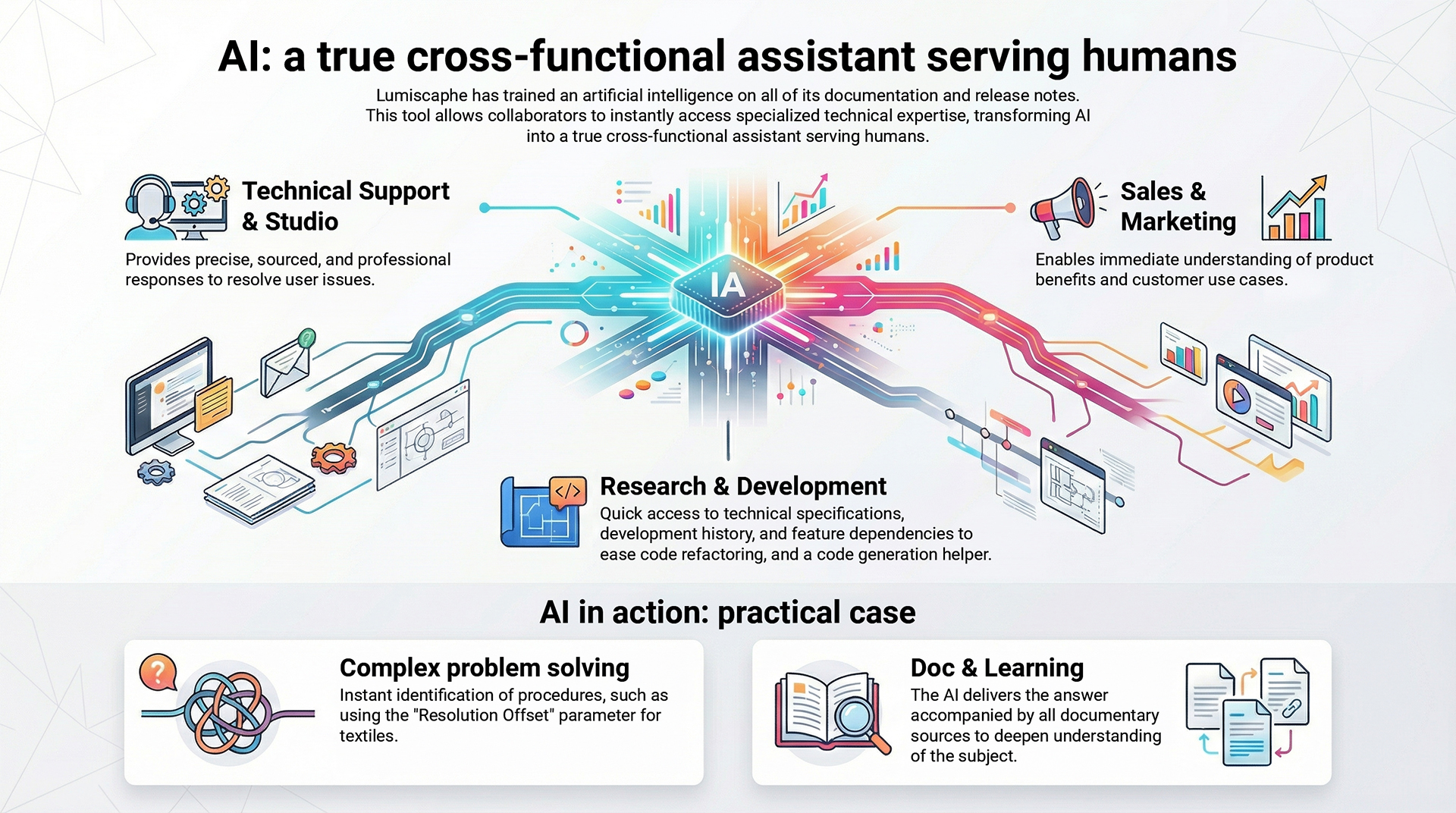
Traditional knowledge management approaches, such as static documentation, scattered wikis, or even well-organized knowledge bases, often create bottlenecks when teams need instant, role-specific expertise.
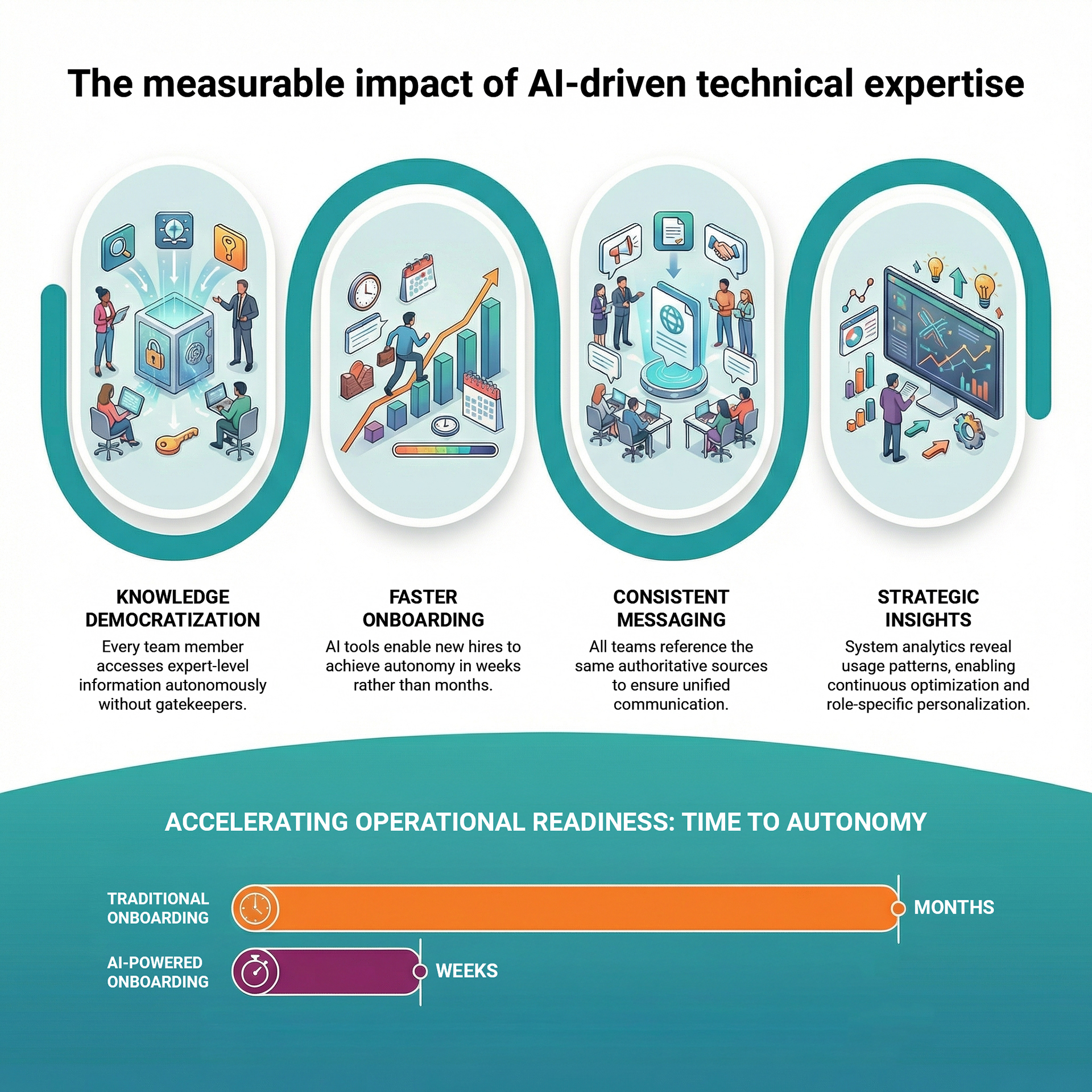
Measurable impact
- Knowledge democratization: Every team member can access expert-level information autonomously.
- Faster onboarding: New hires gain autonomy in weeks instead of months.
- Consistent messaging: All teams reference the same authoritative sources.
- Strategic insights: Analyzing query patterns reveals documentation gaps to address.
Conclusion
AI-powered expertise access at Lumiscaphe represents a pragmatic approach to a real organizational challenge: making complex technical knowledge instantly available across all roles without replacing human expertise.
Key Takeaways:
- AI serves as an accelerator for all teams, not just support.
- Cross-functional benefits improve collaboration and efficiency company-wide.
- Sourced answers maintain authority and traceability.
- The system helps identify knowledge gaps to improve over time.
Next Steps in Our Journey:
As we refine this internal tool, we’re exploring:
- Expanded training on video tutorials and community discussions
- Continuous feedback loops to enhance accuracy
For companies managing complex technical products, AI-assisted knowledge access isn’t just about support; it’s about empowering every team member to work at their highest level.
How does your organization handle cross-functional technical knowledge sharing?
Have you experimented with AI tools for internal expertise access?
Share your experience in the comments below.